
Train of Thought

"Don't chaise people. be yourself, do you own thing and work hard. The right people - the ones who really belong in your life - will come to you. And stay." - Will smith


Unit 1-4: Photography
Photography is used for many different things in many different ways, the following pictures are some of the ways photography can be a job.
Fast shutter speed



Purpose = The purpose of Shutter speed, gives the photographer the ability to use motion (or to freeze motion) to tell a tale or capture a vibe. Whether you choose to take that split-second snapshot with a short shutter speed or to portray the motion of subjects in a slow shutter speed photo, you’re opening up narrative possibilities.
Slow shutter speed
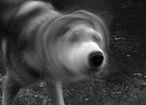


Shallow depth of field


Purpose = A shallow depth of field refers to a small area in focus. Often the subject is in focus, while the background is blurred. This is best for portraits, and one way to adjust this is with aperture. A deep depth of field captures a larger area in focus, often keeping everything in the image sharp and clear.
Large depth of field


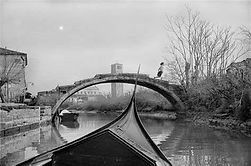
Advertising photographer
Henri Cartier-Bresson (1908-2004)
Henri Cartier-Bresson was a French humanist photographer considered a master of candid photography, and an early user of 35 mm film. He pioneered the genre of street photography, and viewed photography as capturing a decisive moment. Cartier-Bresson was one of the founding members of Magnum Photos in 1947.

Existence? = Advertising photographers craft images that send these messages. A glance at their well-designed image tells consumers that the service will make them feel better and important. By utilizing the expertise of an advertising photographer, marketers can successfully make their products and services stand out from the competition.

Portrait photographer
Yousuf Karsh (1908-2002)
Yousuf Karsh CC (December 23, 1908 – July 13, 2002) was an Armenian-Canadian photographer known for his portraits of notable individuals. He has been described as one of the greatest portrait photographers of the 20th century.

Existence? = Portrait photography can be important for many reasons and those reasons may vary from individual to individual. A portrait photograph may be important for historic preservation, personal branding or for personal pleasure. There is no one reason why portrait photography is important.

Agriculture photographer
Joao Morgado
João Morgado is an architectural and aerial photographer who started his career in 2007 working for many architecture offices which are nationally and internationally famous. He participated in many architecture workshops that run in different countries such as Switzerland, Italy and Holland.

Existence? = Declan ONeill is a professional photographer who lives in the South Island, New Zealand. He travels extensively capturing the beauty of New Zealands extraordinary landscape. The photographs which accompany this article are part of a series entitled The Anatomy of Melancholy which is dedicated to the memory of his sister, Ann, who died from Multiple Systems Atrophy.

Journalism photographer
Annie Leibovitz
Anna-Lou Leibovitz is an American portrait photographer best known for her engaging portraits, particularly of celebrities, which often feature subjects in intimate settings and poses. Leibovitz's Polaroid photo of John Lennon and Yoko Ono, taken five hours before Lennon's murder, is considered one of Rolling Stone magazine's most famous cover photographs.

Existence? = Photojournalism is journalism that uses images to tell a news story. It usually only refers to still images, but can also refer to video used in broadcast journalism. Photojournalism is distinguished from other close branches of photography (such as documentary photography, social documentary photography, street photography and celebrity photography) by having a rigid ethical framework which demands an honest but impartial approach that tells a story in strictly journalistic terms.

Fashion photographer
Steven Meisel
Steven Meisel (born June 5, 1954) is an American fashion photographer, who obtained popularity and critical acclaim with his work in US and Italian Vogue and his photographs of friend Madonna in her 1992 book Sex.

Existence? = In fashion, photography is used to display the product in use and to make it as appealing to the viewer as possible. Eadward Muybridge used photography in a scientific context to prove that when a horse gallops, there is a moment when all four feet leave the ground.

Fine art photographer
Luke Sharratt
Luke Sharratt Finds in the Air a Beautiful Force to Express His Feelings. Loud and quite, invisible and visible, the wind is a source of inspiration for the London UK-based photographer.

Existence? = The definition of fine art photography has an element of subjectivity around it. However, usually fine art photos display feelings, emotions and the artist’s vision, which sets them apart from commercial photography. Forms of fine art photography. Fine art photography is an opportunity for artists to explore and communicate their ideas.

Forensic photographer
Arthur Fellig (1899-1968)
Arthur (Usher) Fellig, known by his pseudonym Weegee, was a photographer and photojournalist, known for his stark black and white street photography in New York City.

Existence? = The use of photography in the recording of a crime scene is very important and has become a steadfast part of the investigation process. As well as witness statements, the reports made by officers and other physical evidence provided by the crime scene itself, photography is used to provide an accurate account that cannot be altered.
Analysis of all
Henri Cartier-Bresson
His work is mostly based outside and therefore uses natural lighting. Most of his work is in black and white and he always takes his pictures from a distance.
Annie Leibovitz
Her work is extradentary, she is a very famous photographer who usually takes pictures of famous people, including the queen. Her work is based in the studio, therefore she uses studio lighting.
Yousuf Karsh
His work is based in a studio, therefore uses studio lighting. He always takes pictures of one subject and edits them in black and white.
Steven Meisel
His work is based in the studio, therefore uses studio lighting. He always edits his pictures in Black and white. I like the way in his pictures, the model is always looking at the camera at an angle.
Joao Morgado
His work is based on taking the full scale picture of buildings. In his work you can see that he always looks like he carefully choses where the angle should be. His work is based outside, therefore dose not use studio lighting. The picture on the right catches your eye because of the use of colour that stands out.
Luke Sharratt
Most of his pictures are based outside, therefore the lighting is natural. I like the creativity of the fantasy theme with his pictures, which makes his pictures look more interesting. I like the way he used the sun in the right image to make the image seem like a dream.
Arthur Fellig
All of his pictures are based inside, but at angles and not in a studio, therefore the lighting is natural. All of his images have been edited in black and white, or just naturally black and white based on the type of clothing the subsect are wearing.

Luke Sharratt is the photographer who took this picture. I like this image because it looks like something out of someones dream or fantasy. Combined with the petals falling out of the sky and the the sun in the camera, the image looks like the models dream. When you combined That with the wedding dress that the model is wearing, the image seems to look like the model is dreaming about her wedding.
This picture was taken outside, therefore the lighting is natural, but the colour has been verified to make it look like a spring picture.
Shallow depth of field


Fast shutter speed


Annie Leibovitz is the photographer who took this picture. I like this image because of the models shadows and piercing blue eyes that makes the picture stand out. This image makes me think that the model is homeless. I think this because of the mud on the models face and the way that the wind is blowing the models hair. The piercing blue eyes stands out in the image and makes the person looking at the picture feel sorry for the model.
This picture was taken in a studio, you can tell because at the back of the model, you can see the backdrop, the lighting is also on one side of the models face and so is the position of the wind machine, which gives the impression that it was taken outside.
What went wrong
When we did this, we did the shallow depth of field and the fast shutter speed first, which is why we have more images of them. This is why for the large depth of field and the slow shutter speed have less images. When it came to doing the slow shutter speed, it was the end of the lesson which is why I only got around to doing 2 pictures.

Annie Leibovitz is the photographer who took this picture. I like the way that the model is too big for the house. This image looks a lot like it is copying a scene from Alice in wonderland when she eats the cake that makes her bigger.
The picture has been taken in a studio, therefore uses studio lighting to light up all of the model.
Large depth of field


Slow shutter speed
What I learned
I leaned how to fiddle with the buttons on the camera to make the images Shallow/ large depth of filed and Fast/slow shutter speed. I did Photography in secondary, but I never really payed attention to the settings.


Ted Gore - Landscape photographer
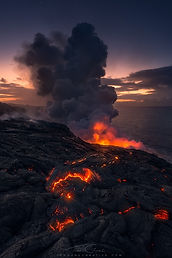


Ted Gore is a landscape photographer based in southern California and has gained massive international acclaim for his development of a highly sophisticated style of photography characterized by a combination of ambitious compositions and seductive processing. His portfolio is a testament to his incredible range and his ability to translate scenes with even the most unconventional features and challenging conditions into compelling works of art.
When I first looked at his work, I thought it was very serial and interesting, which for me made him stand out and chose him. All of these picture look like they have been taken all around the world, this is inspiring. Most of his images uses a extreme wide shot of a subject and i think he edits the lighting afterward. all these images have been taken outside, therefore the lighting is natural.
I like the way that the ice on the water is like a path into the fog, which makes it seem like walking into the unknown.

Natural lighting makes the mountain seem like haven.
Natural lighting
I like the way that the mist is uncovering the mountain behind. this makes the mountain look mysterious and makes the viewer wonder what the mountain beholds.
You can tell that its cold where he took the picture because of the amount ice in the image.
Landscape Photographer Research
Ansel Adams (February 20, 1902 - April 22, 1984)

Ansel Easton Adams was an American landscape photographer and environmentalist known for his black-and-white images of the American West. He helped found Group f/64, an association of photographers advocating "pure" photography which favoured sharp focus and the use of the full tonal range of a photograph.
Natural lighting
He uses large depth of field.

From what I have seen, he always edits his work in black and white. This makes the image look more interesting.
By the way that it has been edited, the image seems to be focused on the river, because the trees surrounding the river have been edited darker.
By looking at his work on the internet, I have noticed that he dose a lot of landscape photography of mountains in large depth of field. He always uses natural lighting and edits his images in black and white.
Edward Weston (March 24, 1886 – January 1, 1958)

Edward Henry Weston (March 24, 1886 – January 1, 1958) was a 20th-century American photographer and Olympic archer. He has been called "one of the most innovative and influential American photographers..." and "one of the masters of 20th century photography."
Natural lighting

His work has been edited in black and white or is just naturally black and white based on the dates that he was born and died.
A lot of his work is based around beaches and sand dunes. All of his work is either naturally black and white based on when he was born and when he died or it could have been edited.
Jem Southam (1950)

Jem Southam was born in Bristol in 1950. He studied at the London College of Printing for a Higher Diploma in Creative Photography from 1969 to 1972. He is now Professor of Photography at the University of Plymouth. Southam's subject is the rural landscape of the South West of England, where he lives and works.

Natural lighting
Edited darker around the edges to make the tree stand out.
I have noticed that most of the images he takes are in forests and they all look quite bleak. They all look like they have been edited.
Joe Cornish (1958)

Joe Cornish (born 4 March 1958) is a British photographer noted for his large format landscapes.
Born in Exeter, Devon, England in 1958, he graduated with a degree in Fine Art from University of Reading in 1980 and then went to America to train as a photographer's assistant. From 1982 he moved to London working first as a freelance assistant before starting out as a general purpose commercial photographer.

Natural lighting
This photographer uses colour and enhances the colour to make the image vibrant.
His work is quite pretty and vibrant. I've noticed that he always focuses in on a subject and still has a lot of landscape, which looks quite interesting. Unlike the other photographers, his work is in colour.
Street photography research
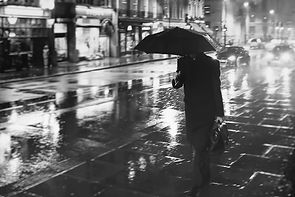
Ronya Galka
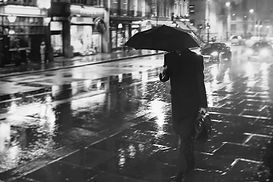
About Ronya Galka Born and educated in Germany, Ronya moved to London in the early 1990s and it is there that she launched her photography career and developed her own style of urban and street photography, extracting the extraordinary from life around her.

The image has been edited in black and white. This makes the image more interesting.
Car lights for lighting
The rain on the ground reflects the car lights. This adds a brighter lights in the image.
Her work is quite interesting because what I've seen from looking at her pictures on google, she takes pictures of people in there everyday lives walking around towns and city's and edits them in black and white. None of them look staged, which is what I like most about them.
Ansel Adams


Chosen Photographers
I have chosen to do Ansel Adams as the photographer in landscape for my inspiration and Ronya Galka as the photographer in street photography for my inspiration. I will try to replicate both of these photographers over the half term.
Over the half term, I will be going to Oxford to see my Aunt and Uncle, so there will probably be a lot of streets that I can do the street Photography. The street photography will be done at night, because a lot of Ronya Galka's work is taken at night. Because we live in England, it is very likely that it will rain, which is good for this photographer because most of her photography is random people walking in the rain. When I get back to college I will edit the best pictures in black and white.
When I get back from Oxford, I will try to go on the moors and find some landscapes to do the landscape photography. This will be taken in the day time preferably when its sunny. When I get back to college I will also edit the best of the landscape pictures in black and white.
Ronya Galka

Landscape Photography


Street Photography
Per revue for both shoots


I went to Oxford over the half term and because its so beautiful there I was able to get a lot of pritty and interesting landscape and Street photography.
Edit of Landscape photography


Edit of street photography

Print screens
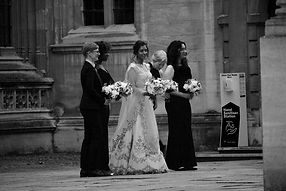

Courtney did say that my pictures didn't need anything to improve them, but I did need to edit them in black and white to make them look similar to the photographers that I chose.
Contact sheets
Landscape
Street
Framed

Reflection on per revue for both shoots
Leading lines

This is the use of elements in a particular composition to create visual balance and lead the viewer’s attention to the primary object.
leading lines is an image composition technique that features line shapes - like, say, a road or river - to draw the viewer’s eye to the intended subject of the photograph.
Compositions
Symmetry

In photography, using symmetry creates balance and a sense of harmony when viewing the photograph.
Rule of Thirds

The rule of thirds helps direct the viewer’s gaze to the main focal point of an image, whatever the subject may be. It makes the most of empty space by drawing your eye to a specific part of the image, emphasised through composition.
Golden ratio

It helps lead the viewer’s eye through the entire photo, leading to more captivating images.
Reflection

This type of photography can add an interesting spin to locations that are hotspots for photographers such as oceans, lakes, puddles, and even rain drops.
Negative space

If I was given more time, these pictures would have turned out better.
Negative space, sometimes referred to as white space, is a concept that's been used in art, design, architecture, and sculpture for hundreds of years.
Edits


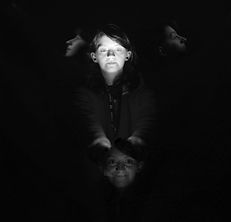
Light photography
light photography shoot


Failures of the light photography shoot
I had already done this shoot several times before, which meant I knew what I was doing when it came to the shoot.
Contact sheet


Before

After
After


Portrait photography
Alec Soth
Sally Mann
Adrienne Salinger
Sian Davey
Mary Ellen Mark
Robert Darch


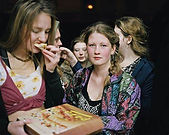


Alec Soth
Robert Darch
His work is not typical when you think of portraiture. For example in the picture hear, the model is barely visible in the image and you can see that he is surrounded by many books, which is taking up most of the image. In this image the lighting is natural, you can tell this because the model is sitting by what seems to be a window which is out of shot, so it could also be lighting that is set to look like natural light.
The composition that the photographer has used in this image is negative space and the depth of field is large in this image.
Where as Alec, his work is very typical when you think of portraiture. For example, in this picture, the models face is taking up the full frame of the image. The lighting in this image is very moody, you can tell that the model is looking at a fire from the colour of the light shining on her face and the fact that she is surrounded by darkness and what looks like leaves in the background. This suggests that the model is looking at a camp fare and she is deep in thought by the expression on her face.
In this image, the photographer has used depth of field to highlight the model and the expression on their face.
Shoot Plan
When shooting portraiture, it would be better not to take it in a studio. Yes, you have good lighting in a studio, but when your not in a studio, you can get depth of field. This is particularly easy when your outside because there is a lot of nature that you can use for the background. You can also get natural lighting when your outside, which is better because it makes the image more realistic.
Portrait photography aims toward capturing the personality of a person or group of people by using effective lighting, backdrops, and poses. A portrait photograph may be artistic or clinical. I will be shooting in the style of Robert Darch, so when I do this shoot I will aim to shoot outside with a tripod and I will be shooting myself with my manual clicker that will take the picture. From looking at his pictures, most of the models he shoots in his photography are not smiling and they look deep in thought, I will try to mimic this as best I can. I will try to shoot on a sunny day as the photography would look way moor interesting and shadows would be better. My edit will try to mimic Roberts work as best I can.
Before


After


What went wrong
I forgot to do the shoot over the weekend. Not only that, but it was very windy on Friday and Saturday and from experience, I can't get very good pictures when it is windy. This meant that I had to get pictures from previous shoots that I have done. I did take some of the pictures with my clicker, some are of my friend and some are taken by my mum. They are labelled in the gallery.
Gallery of portrait photography


Contact sheet
Print screens
Reflection on shoot
Final products


Unit Evaluation
Refer to your Unit Brief – what were the Photography Unit intentions?
My intentions for this unit was to develop my skills in photography. The unit brief says "Your portfolio must be annotated with your reflections throughout." I did this as you can tell from the evidence on Wix.
How close to your shoot plans were your shoots?
All my shoot plans apart from my last one were close to what I did shoot. My last shoot I took from previous years, because the weekend that I was gong to shoot, I very busy and the storm interrupted actually shooting. For my first 2 shoots I did it exactly how I planed it because I did go to Oxford and take some very good landscape and street photography.
Did you apply your learnt skills (from learning and error) in your final shoot?
Even though I did photography in secondary, I never actually learnt how to use the camera properly, in this unit I did, so i feel like I learned quite a lot.